Esports World Cup puts esports betting trends on display
The Esports World Cup was in full swing this summer, with esports betting trends overlapping all the action.
The growth of esports as both a form of entertainment and, in many people’s eyes, a sport, has been nothing short of remarkable.
Since the turn of the 2010s, especially, esports has enjoyed exponential growth across the world. The betting industry has followed that trajectory, and esports betting is now just as much a sportsbook fundamental as football in many cases.
The growth of esports betting has benefitted from the myriad high-profile tournaments on offer, not least the Esports World Cup (EWC), which was in full swing in Paris, France, as this issue of iNTERGAMINGi was in production.
Esports World Cup
The Esports World Cup, which took place between July 6 to August 23, offered over US$75m in prizes across 24 titles and 25 tournaments.
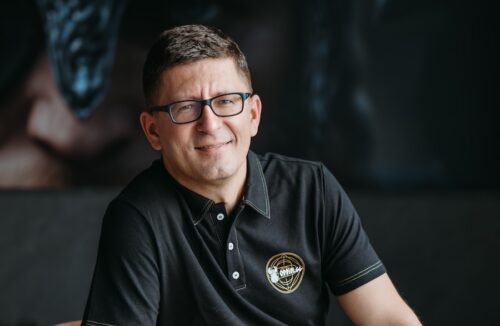
“That’s not one final; it’s a full calendar of content,” Oddin.gg co-founder Marek Suchar told iNTERGAMINGi.
The other major World Cup this summer was estimated to have pulled in billions in betting handle, but Suchar insisted that esports operates on a different scale.
Teams over tournaments
“We have to remember that a tournament lifts handle, but it won’t build a vertical for a book,” he said. “Teams matter more than tournaments for handle. Our own data shows betting activity is increasingly following teams over tournaments, with bettors backing Team Falcons or Natus Vincere and following that club into whatever it plays next.
"Similarly, we’re also seeing bettors follow players as they move from team to team. That’s where the opportunity runs well past the EWC’s closing ceremony, as long as the markets for those clubs stay open.”
The evolution of esports betting markets
We know that bet builders were the order of the day for the World Cup for many sportsbooks, but how are esports betting markets adapting to consumer demand?
“Let’s start with looking at a fact that might surprise you: match winner is not the most popular market in esports,” Suchar said. “Across the five biggest titles, it accounts for between 25 per cent and 33 per cent of bets. Map winner, though, accounts for up to 51 per cent of bets in Dota 2.
“What we can see is that bettors are not necessarily looking at the outcome; they’re more interested in what happens in-game, and that trend is accelerating.”
Player and utility markets in Counter-Strike 2 grew by up to 80 per cent between two majors last year, Suchar said, while in Dota 2, combination markets pairing map winner with total kills or duration quadrupled in volume.
“In Valorant, we introduced player markets mid-season, and they moved into the core betting mix almost immediately,” he added.
Bettors are not necessarily looking at the outcome; they’re more interested in what happens in-game, and that trend is accelerating.
“Format changes drive this evolution too. Riot’s Fearless Draft increased match-to-match variability across League of Legends, which strengthened live engagement. It’s important for operators to understand that a patch in esports is not merely a small change to a graphic. It can completely change the competitive strategy, and our models have to adjust to keep up.
“Mobile Legends Bang Bang is not a new title, but it reached a scale in 2025 that earned it a place in our annual review for the first time. The growth was primarily driven by the Asian market, but the game developer has been trying to gain traction in other regions.”
Latin America and Asia potential
While the global take-up of esports has been clear to see, there are nuances across regions.
“North America is a fast-growing market, but it is not yet the biggest,” Suchar said, adding that Oddin.gg, which is now licensed in 10 North American jurisdictions, is “excited about the potential there, especially given the interest in esports and the eagerness of a new generation of bettors to start betting on esports.”
“Europe, on the other hand, is the more mature market,” Suchar said. “Operators there aren’t questioning whether they need to carry esports; they know it’s a critical offer for their books. The debate there is about the depth of markets and variety of content.
“Latin America is where the appetite is greatest, and Brazil’s regulated market has raised expectations there. That said, Brazil has a great deal of complexity, which makes it a challenging market for operators and suppliers.
“Asia has the scale; it is mobile-first, and it’s region-led. MPL Indonesia and MPL Philippines anchor the Mobile Legends calendar. That structure produced 62-per-cent volume growth. It is the clearest evidence that regional consistency beats occasional global events.”
AI's role in esports betting
The proliferation of artificial intelligence has come at a good time for the esports betting sector, Suchar said.
“We should look at the topic of AI on two levels. The first is infrastructure,” he said. “Machine learning handles the volume and speed esports demands – thousands of in-game events a minute, priced and repriced live. That matters more now than it did three years ago because bettors have moved into granular markets.
“When player and utility markets in CS2 grow by up to 80 per cent between two majors, someone has to be able to price all of that in-play without suspending betting and risking losing bettors."

“As for risk, AI flags anomalies in real time, adjusts exposure and supports traders in making critical calls in the moment," Suchar added.
“The second level is product. We have given our efootball bots faces, personalities and real-time emotional reactions. This adds a different level of engagement and entertainment for bettors.
“What AI has not replaced is people. In CS2, the model leads and the trader watches for anomalies. In MOBAs [Multiplayer Online Battle Arenas], it is closer to captain and co-pilot because an unconventional draft sits outside the historical data. Anyone selling full automation in esports is overpromising.”
While the end of the Esports World Cup marked the closure of the latest chapter in one of the industry’s most high-profile get-togethers, it will certainly serve as inspiration – and motivation – for sportsbooks to continue putting resources into the sector.